If you’re eyeing the future of cloud computing, understanding AWS stock is non-negotiable. As Amazon’s profit engine, AWS drives innovation, revenue, and market dominance—making it a powerhouse worth watching closely in 2024.
What Is AWS and Why It Matters for Investors

Amazon Web Services (AWS) isn’t just another tech division—it’s the world’s leading cloud computing platform, powering everything from startups to government agencies. Launched in 2006, AWS pioneered infrastructure-as-a-service (IaaS) and platform-as-a-service (PaaS), setting the gold standard for scalability, reliability, and global reach.


The Birth of AWS: A Game-Changer in Tech
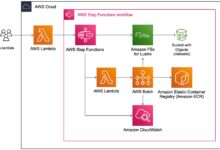
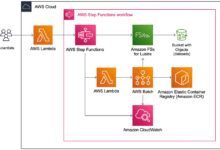
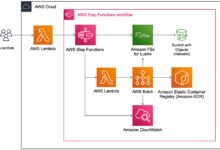
AWS emerged from Amazon’s internal need to streamline its own computing infrastructure. By 2006, the company realized that its robust backend systems could be offered as services to other businesses. The launch of Simple Storage Service (S3) and Elastic Compute Cloud (EC2) marked the beginning of a new era in IT.
aws stock – Aws stock menjadi aspek penting yang dibahas di sini.
- First major cloud provider to offer pay-as-you-go pricing.
- Introduced scalable virtual servers and storage accessible via APIs.
- Laid the foundation for modern DevOps and cloud-native development.
According to AWS’s official history, this shift allowed developers worldwide to deploy applications without investing in physical hardware, democratizing access to computing power.
Market Leadership and Global Reach
As of 2024, AWS holds approximately 32% of the global cloud infrastructure market, ahead of Microsoft Azure (23%) and Google Cloud (11%), according to Synergy Research Group. Its network spans 33 geographic regions with 102 Availability Zones, ensuring low latency and high availability for users across six continents.
- Supports mission-critical workloads for Netflix, Airbnb, and the U.S. Department of Defense.
- Offers over 200 fully featured services, including AI/ML, databases, analytics, and IoT.
- Continues to expand into emerging markets like Latin America and Southeast Asia.
“AWS didn’t just enter the cloud market—it created it.” — Marc Andreessen, Co-founder of Andreessen Horowitz
AWS Stock: Why You Can’t Buy It Directly
One of the most common misconceptions among investors is the belief that you can purchase shares of AWS as a standalone company. The truth? AWS is a division of Amazon.com, Inc. (NASDAQ: AMZN), meaning there is no direct ‘AWS stock’ available on public exchanges.
aws stock – Aws stock menjadi aspek penting yang dibahas di sini.
Understanding Amazon’s Corporate Structure
Amazon operates as a single publicly traded entity, with AWS functioning as one of its key business segments. Financially, AWS is reported under Amazon’s “Amazon Web Services” segment in quarterly earnings reports. While it doesn’t have its own ticker symbol, AWS contributes disproportionately to Amazon’s profitability.
- Amazon’s retail operations often operate on thin margins.
- In contrast, AWS consistently reports operating margins above 30%.
- This makes AWS the primary profit driver for the entire Amazon ecosystem.
For example, in Q4 2023, AWS generated $24.6 billion in revenue and $8.9 billion in operating income—accounting for nearly 75% of Amazon’s total operating profit despite representing only about 18% of total revenue.
How to Gain Exposure to AWS Performance
Since you can’t buy AWS stock directly, the most effective way to invest in AWS is by purchasing shares of Amazon (AMZN). The performance of AWS significantly influences Amazon’s stock price, especially during earnings seasons when investors scrutinize AWS growth rates and margins.
aws stock – Aws stock menjadi aspek penting yang dibahas di sini.
- Strong AWS revenue growth often leads to positive AMZN stock reactions.
- Slower-than-expected cloud growth can trigger sell-offs, even if retail improves.
- Analysts frequently use AWS metrics as a proxy for Amazon’s long-term valuation.
Additionally, some investors look at ETFs or mutual funds with heavy Amazon weighting, such as the Vanguard S&P 500 ETF (VOO) or Invesco QQQ Trust (QQQ), which track broad tech indices where Amazon is a top holding.
Financial Performance: AWS as Amazon’s Profit Engine
To understand why AWS is so critical to Amazon’s valuation, we need to dive into its financials. Over the past decade, AWS has evolved from a cost center into the company’s most profitable segment.
Revenue Growth Trajectory (2015–2024)
AWS revenue has grown at a compound annual growth rate (CAGR) of approximately 35% since 2015. From $7.9 billion in 2015, it reached $90.8 billion in 2023, and projections suggest it could surpass $120 billion by 2025.
aws stock – Aws stock menjadi aspek penting yang dibahas di sini.
- 2015: $7.9B
- 2018: $25.7B
- 2020: $45.4B
- 2022: $80.1B
- 2023: $90.8B
This consistent growth reflects increasing enterprise adoption, hybrid cloud solutions, and expansion into AI-driven services. Even during economic downturns, AWS has maintained double-digit year-over-year growth, underscoring its resilience.
Operating Margins: The Hidden Powerhouse
What truly sets AWS apart is its profitability. While Amazon’s North America retail segment often operates below 5% margin, AWS has sustained operating margins between 28% and 32% in recent years.
- Q1 2023: 31.1% margin
- Q2 2023: 30.8% margin
- Q3 2023: 30.2% margin
- Q4 2023: 36.2% margin
This margin strength allows Amazon to reinvest in logistics, advertising, and international markets while still delivering solid bottom-line results. In fact, AWS profits often subsidize Amazon’s lower-margin ventures, acting as a financial buffer.
aws stock – Aws stock menjadi aspek penting yang dibahas di sini.
“AWS is the cash cow that funds Amazon’s future.” — Brian Wieser, Senior Analyst at Pivotal Research
Competitive Landscape: AWS vs. Azure vs. Google Cloud
The cloud computing market is fiercely competitive, with AWS, Microsoft Azure, and Google Cloud Platform (GCP) dominating the landscape. Each player brings unique strengths, but AWS maintains a first-mover advantage and broader service portfolio.
Market Share Breakdown (2024)
According to Synergy Research Group’s Q1 2024 report:
- AWS: 32%
- Microsoft Azure: 23%
- Google Cloud: 11%
- Remaining: Alibaba, Oracle, IBM, and others
AWS leads in both infrastructure and platform services, particularly in compute, storage, and serverless computing. Its early entry gave it a massive ecosystem of partners, third-party tools, and certified professionals.
aws stock – Aws stock menjadi aspek penting yang dibahas di sini.
For more data, visit Synergy Research Group.
Service Breadth and Innovation
AWS offers more than 200 services, far exceeding Azure (~150) and GCP (~100). Key differentiators include:
- Amazon EC2: The most widely used virtual server platform.
- Amazon S3: Industry-standard object storage with 99.999999999% durability.
- AWS Lambda: Pioneer in serverless computing.
- Amazon RDS and DynamoDB: Leading managed database solutions.
- AWS AI/ML services: SageMaker, Rekognition, and Bedrock for generative AI.
Microsoft Azure excels in integration with Windows environments and enterprise software (e.g., Office 365, Active Directory), making it popular among legacy corporations. Google Cloud leverages its data analytics and AI expertise, particularly in Kubernetes (via Google Kubernetes Engine) and BigQuery.
aws stock – Aws stock menjadi aspek penting yang dibahas di sini.
Pricing and Customer Lock-In
AWS uses a tiered pricing model with volume discounts, reserved instances, and spot instances for cost optimization. While often perceived as expensive, AWS provides granular control over costs through tools like AWS Cost Explorer and Budgets.
- Reserved Instances: Up to 75% discount for 1–3 year commitments.
- Spot Instances: Up to 90% off for interruptible workloads.
- Free Tier: 12 months of free usage for new customers.
However, customer lock-in remains a concern. Migrating away from AWS can be complex due to proprietary services (e.g., DynamoDB, CloudFormation), though multi-cloud strategies are gaining traction.
Strategic Initiatives Driving AWS Growth
AWS isn’t resting on its laurels. The company is aggressively investing in next-generation technologies to maintain its leadership and drive future revenue—key areas include artificial intelligence, edge computing, and industry-specific solutions.
aws stock – Aws stock menjadi aspek penting yang dibahas di sini.
AI and Machine Learning Expansion
In 2023, AWS launched Amazon Bedrock, a fully managed service for building with foundation models (FMs). This positions AWS as a major player in the generative AI race alongside Microsoft (via OpenAI) and Google (via DeepMind).
- Bedrock offers access to models from Anthropic, Meta, and Amazon’s own Titan.
- Integrated with SageMaker for custom model training and deployment.
- Supports use cases like chatbots, content generation, and code automation.
AWS also acquired Perceive, an edge AI chipmaker, to enhance on-device inference capabilities. These moves signal a long-term bet on AI-as-a-service, a market projected to exceed $1.3 trillion by 2032 (Precedence Research).
Edge Computing and 5G Integration
With the rise of IoT and real-time applications, AWS is expanding its edge computing footprint through AWS Wavelength and AWS Local Zones. These allow developers to run applications closer to end-users, reducing latency for gaming, autonomous vehicles, and smart cities.
aws stock – Aws stock menjadi aspek penting yang dibahas di sini.
- Wavelength integrates with 5G networks from Verizon, AT&T, and others.
- Local Zones bring AWS infrastructure into urban areas for low-latency access.
- Outposts enables on-premises deployment for hybrid cloud scenarios.
This strategy ensures AWS remains relevant in latency-sensitive industries where milliseconds matter.
Industry-Specific Cloud Solutions
AWS is tailoring its offerings for verticals like healthcare (AWS for Health), finance (AWS Financial Services), and automotive (AWS for Automotive). These solutions come with compliance certifications, pre-built templates, and partner ecosystems.
- AWS for Health supports HIPAA-compliant data processing and genomics research.
- AWS FinSpace enables financial analysts to process large datasets using natural language.
- Amazon Q, an AI-powered business chatbot, is being integrated across these verticals.
By focusing on regulated industries, AWS reduces friction for enterprise adoption and increases customer lifetime value.
aws stock – Aws stock menjadi aspek penting yang dibahas di sini.
Risks and Challenges Facing AWS
Despite its dominance, AWS faces several headwinds that could impact its growth trajectory and, by extension, Amazon stock performance.
Intensifying Competition
Microsoft Azure is gaining ground, especially in enterprise contracts where Microsoft’s software suite provides sticky integration. Google Cloud, while smaller, is growing rapidly in AI and data analytics. Additionally, niche players like Oracle Cloud and Alibaba Cloud are making inroads in specific regions.
- Microsoft’s “land and expand” strategy via Office 365 is effective.
- Google’s open-source leadership (e.g., Kubernetes) attracts developer mindshare.
- Price wars could compress margins if competitors undercut aggressively.
A 2023 Gartner report noted that multi-cloud adoption is rising, with 89% of enterprises using at least two providers—potentially diluting AWS’s share over time.
aws stock – Aws stock menjadi aspek penting yang dibahas di sini.
Regulatory and Antitrust Scrutiny
As a dominant player, AWS is increasingly under regulatory scrutiny. The European Union and U.S. Federal Trade Commission have launched investigations into whether Amazon leverages AWS data to gain unfair advantages in its retail business.
- Allegations include using AWS customer usage patterns to inform Amazon retail decisions.
- Potential breakup scenarios, though unlikely, could impact investor sentiment.
- Data sovereignty laws (e.g., GDPR, CCPA) require localized infrastructure, increasing operational costs.
Any forced structural separation could theoretically lead to a spin-off of AWS, which some investors view as a bullish scenario due to unlocking hidden value.
Economic Sensitivity and Cloud Optimization
While cloud spending is generally resilient, economic downturns can lead to “cloud repatriation” or optimization efforts. In 2022–2023, several companies reduced AWS usage to cut costs, opting for on-premises solutions or more efficient architectures.
aws stock – Aws stock menjadi aspek penting yang dibahas di sini.
- Startups may delay cloud adoption due to funding constraints.
- Enterprises are adopting FinOps practices to manage cloud spend.
- Slower growth in SMB segment compared to enterprise.
However, long-term demand remains strong, driven by digital transformation, AI, and remote work trends.
Future Outlook: Can AWS Sustain Its Dominance?
The next five years will be pivotal for AWS. While it enjoys a strong moat, sustaining leadership requires continuous innovation, strategic acquisitions, and adaptation to shifting market dynamics.
Potential for an AWS Spin-Off
Rumors about an AWS spin-off have circulated for years. Proponents argue that separating AWS would allow it to operate more nimbly, pursue independent partnerships, and unlock shareholder value.
aws stock – Aws stock menjadi aspek penting yang dibahas di sini.
- Analysts estimate AWS could be valued at $1.5–$2 trillion independently.
- A spin-off might resemble PayPal’s separation from eBay or PayPal’s own planned split from eBay.
- However, Amazon leadership has consistently denied plans for a breakup.
Still, activist investors like Dan Loeb have pushed for structural changes, suggesting the idea won’t disappear anytime soon.
Global Expansion and Emerging Markets
AWS is investing heavily in new regions, including Saudi Arabia, Israel, and New Zealand. It’s also expanding in Africa and South Asia, where digital infrastructure is underdeveloped but demand is rising.
- New regions improve latency and compliance with local data laws.
- Partnerships with local telcos and governments accelerate adoption.
- Challenges include political instability and currency fluctuations.
These expansions position AWS to capture growth in underserved markets, diversifying its revenue base.
aws stock – Aws stock menjadi aspek penting yang dibahas di sini.
Sustainability and Green Cloud Initiatives
AWS has committed to powering its operations with 100% renewable energy by 2025, five years ahead of its original 2030 target. It’s also investing in energy-efficient data centers and carbon offset programs.
- Over 300 renewable energy projects globally.
- Leadership in the Climate Pledge, co-founded with Amazon.
- Sustainability is becoming a key differentiator for enterprise buyers.
This not only reduces environmental impact but also appeals to ESG-focused investors who influence capital allocation.
Can I buy AWS stock directly?
aws stock – Aws stock menjadi aspek penting yang dibahas di sini.
No, AWS is a division of Amazon.com, Inc., so there is no standalone AWS stock. To invest in AWS, you must purchase shares of Amazon (NASDAQ: AMZN), which trades on the stock market.
Why is AWS so important to Amazon’s stock price?
AWS generates the majority of Amazon’s operating profits despite contributing a smaller share of total revenue. Its high-margin business model and consistent growth make it a key driver of Amazon’s valuation and investor sentiment.
How does AWS compare to Microsoft Azure and Google Cloud?
AWS leads in market share, service breadth, and global infrastructure. Azure excels in enterprise integration, while Google Cloud is strong in data analytics and AI. AWS maintains a first-mover advantage but faces increasing competition.
Is AWS growing slower now?
While AWS growth has moderated from triple-digit early years to high-single or low-double digits, it remains robust. In 2023, AWS grew revenue by 19% year-over-year, which is still faster than many tech sectors. The focus has shifted from pure growth to profitability and strategic innovation.
Could AWS be spun off from Amazon?
There is no official plan for a spin-off, but the idea persists among analysts and investors. A separation could unlock significant value, but Amazon’s leadership prefers the current integrated model for synergies and reinvestment.
In conclusion, while you can’t buy AWS stock directly, understanding its role within Amazon is crucial for any investor. AWS is not just a cloud provider—it’s the financial and technological backbone of one of the world’s most influential companies. Its market leadership, innovation in AI and edge computing, and strong profitability make it a cornerstone of Amazon’s future. Despite competitive pressures and regulatory challenges, AWS remains well-positioned for sustained growth. For investors, monitoring AWS performance is the closest thing to holding ‘AWS stock’—and it’s a strategy worth mastering in 2024 and beyond.
Recommended for you 👇
Further Reading:
