Want to explore Amazon Web Services without spending a dime? The AWS Free Tier is your golden ticket. It offers real, usable cloud resources for free—perfect for learning, testing, and even small production workloads.
What Is AWS Free Tier?

The AWS Free Tier is Amazon’s way of letting users experience its cloud platform without financial risk. It’s not a trial or demo—it’s access to real AWS services with real capabilities, albeit with usage limits. Whether you’re a student, developer, startup founder, or IT professional, the Free Tier lowers the barrier to entry into the world of cloud computing.


Core Concept of the Free Tier
At its heart, the AWS Free Tier is a promotional offering designed to encourage adoption of AWS services. It allows new AWS accounts to use select services at no cost for a defined period or within specific usage limits. This isn’t fake data or sandboxed environments—it’s the actual AWS infrastructure.
- Available to all new AWS customers.
- Does not require a credit card for some services (though one is needed for account verification).
- Provides hands-on experience with industry-standard cloud tools.
According to AWS’s official Free Tier page, over 60 services are included in the free offering, with varying durations and limits.
Types of Free Tier Offers
AWS doesn’t offer just one type of free access. Instead, it provides three distinct categories under the Free Tier umbrella, each serving different needs and timelines.
12-Month Free: Available for one year after account creation.Includes popular services like EC2, S3, RDS, and Lambda.Always Free: No time limit..
Services like AWS Lambda, DynamoDB, and S3 offer limited usage forever.Short-Term Free Trials: Time-limited trials for specific services (e.g., Amazon Lightsail or Amazon Connect), often available even after the first year.”The AWS Free Tier is one of the most generous in the industry, giving developers real compute, storage, and database resources to build and learn.” — TechRadar, 2023How to Sign Up for AWS Free TierGetting started with the AWS Free Tier is straightforward, but it’s important to follow the correct steps to ensure you qualify and stay within free limits.The process takes less than 10 minutes and opens the door to a vast ecosystem of cloud tools..
Create an AWS Account
The first step is creating an AWS account. Visit aws.amazon.com and click on “Create an AWS Account.” You’ll need to provide basic personal or business information, including your name, email address, and phone number.
- A valid email address is required for verification.
- You must provide a payment method (credit/debit card) for identity verification, even though you won’t be charged during the Free Tier period.
- AWS uses this card to verify your identity but will not charge you unless you exceed free limits or use paid services.
After submitting your details, AWS will call or text you to confirm your phone number using a verification code.
Verify Identity and Select Plan
Once your contact details are confirmed, AWS will ask you to choose a support plan. For the Free Tier, select the Basic (Free) plan. This gives you access to online documentation, forums, and basic health checks.
- Paid support plans (Developer, Business, Enterprise) are unnecessary for Free Tier users.
- The Basic plan includes access to AWS Trusted Advisor checks, though only the seven core checks are free.
- Identity verification may include address confirmation depending on your region.
After selecting the Basic plan, your account is activated, and you can immediately start using AWS Free Tier services.
Top 7 AWS Free Tier Services You Should Try
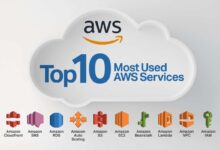
The AWS Free Tier includes over 60 services, but some are more valuable and widely used than others. These seven services offer the most practical learning and development opportunities while staying within free limits.
Amazon EC2 (12-Month Free)
Amazon Elastic Compute Cloud (EC2) is the cornerstone of AWS compute services. The Free Tier includes 750 hours per month of Linux or Windows t2.micro or t3.micro instances for the first 12 months.
- Sufficient for hosting small websites, development servers, or learning Linux administration.
- Can run one instance continuously (24/7) or multiple instances intermittently.
- Must use t2.micro or t3.micro instance types to qualify for free usage.
For example, you can launch a WordPress site on EC2 using a Linux AMI and connect it to RDS for the database—all within the Free Tier. Learn more at AWS EC2 Pricing.
Amazon S3 (Always Free)
Amazon Simple Storage Service (S3) offers scalable object storage. The Free Tier includes 5 GB of standard storage, 20,000 Get requests, and 2,000 Put requests per month—forever.
- Ideal for storing backups, static website files, or user uploads.
- Great for learning about buckets, permissions (IAM), and lifecycle policies.
- Be cautious of data transfer costs if downloading large files frequently.
S3 is often used in conjunction with other services like CloudFront or Lambda, making it a foundational skill for cloud architects.
AWS Lambda (Always Free)
AWS Lambda lets you run code without provisioning servers. The Free Tier includes 1 million free requests per month and 400,000 GB-seconds of compute time.
- Perfect for event-driven applications (e.g., processing S3 uploads).
- Used in serverless architectures and microservices.
- Highly cost-effective; most small projects never exceed the free tier.
Lambda integrates seamlessly with API Gateway, DynamoDB, and SNS, enabling powerful automation workflows at zero cost.
Amazon RDS (12-Month Free)
Amazon Relational Database Service (RDS) simplifies database management. The Free Tier offers 750 hours per month of a db.t3.micro instance with MySQL, PostgreSQL, MariaDB, Oracle, or SQL Server Express Edition.
- Supports learning SQL, database administration, and backup strategies.
- Can be used with EC2-based applications for full-stack development.
- Includes 20 GB of General Purpose (SSD) storage and 20 million I/Os per month.
It’s important to note that automated backups are stored for 7 days by default, and snapshots beyond that may incur charges if not managed.
DynamoDB (Always Free)
Amazon DynamoDB is a fully managed NoSQL database. The Free Tier includes 25 GB of storage, 25 write capacity units, and 25 read capacity units per month—forever.
- Excellent for mobile apps, gaming backends, and real-time web apps.
- Auto-scales and integrates with Lambda and API Gateway.
- Free tier is sufficient for low-traffic applications or prototypes.
DynamoDB’s serverless nature makes it a favorite among developers building modern, scalable applications.
Amazon CloudWatch (Always Free)
CloudWatch monitors AWS resources and applications. The Free Tier includes basic monitoring, 10 custom metrics, 10 alarms, and 5 dashboards per month.
- Essential for tracking performance, setting alerts, and troubleshooting.
- Logs are limited to 5 GB ingestion and 5 GB archive per month.
- Free for basic use but can become expensive with high-volume logging.
Monitoring is critical in production environments, and CloudWatch provides the tools to get started at no cost.
Amazon VPC (Always Free)
Virtual Private Cloud (VPC) lets you launch AWS resources in a logically isolated virtual network. Most VPC features are free, including subnets, route tables, and security groups.
- Core to understanding AWS networking and security.
- Enables creation of private and public subnets for multi-tier architectures.
- Only associated services (like NAT Gateways) incur charges.
Learning VPC is essential for anyone pursuing AWS certifications like the Solutions Architect Associate.
Understanding AWS Free Tier Limits and Usage Tracking
While the AWS Free Tier is generous, it’s not unlimited. Exceeding usage limits can result in unexpected charges. Understanding these limits and how to track them is crucial to avoiding bill shocks.
Common Usage Limits by Service
Each service in the Free Tier has specific constraints. Here are some key limits to remember:
- EC2: 750 hours/month of t2.micro or t3.micro (Linux/Windows).
- S3: 5 GB storage, 20,000 GETs, 2,000 PUTs per month.
- Lambda: 1M requests, 400,000 GB-seconds compute time.
- RDS: 750 hours/month, 20 GB storage, 20M I/Os.
- DynamoDB: 25 GB storage, 25 WCU, 25 RCU.
These limits reset monthly, so you can plan usage accordingly. For example, you could run an EC2 instance 24/7 for 31 days (744 hours), which is under the 750-hour cap.
Monitoring Your Free Tier Usage
AWS provides tools to help you track your Free Tier usage in real time. The most important is the Free Tier Dashboard in the AWS Management Console.
- Navigate to the Billing & Cost Management dashboard.
- Check the Free Tier section to see your current usage vs. limits.
- Set up billing alerts using CloudWatch and SNS to get email notifications.
For example, you can create a CloudWatch alarm that triggers when your EC2 usage exceeds 700 hours in a month, giving you a heads-up before hitting the limit.
“Monitoring your AWS usage isn’t just about saving money—it’s about building responsible cloud habits from day one.” — AWS Blog
Best Practices to Stay Within AWS Free Tier Limits
Staying within the Free Tier is easy if you follow a few best practices. These strategies help you maximize value while avoiding accidental charges.
Use AWS Budgets and Alerts
AWS Budgets allows you to set custom cost and usage budgets. You can create a budget specifically for Free Tier services and receive alerts when you approach limits.
- Create a monthly budget of $0 to get notified of any charges.
- Set percentage-based alerts (e.g., 50%, 80%, 100% of free tier usage).
- Integrate with SNS to send email or SMS notifications.
This proactive approach ensures you’re never surprised by a bill.
Terminate Unused Resources
One of the most common causes of unexpected charges is leaving resources running unnecessarily. Always clean up after testing.
- Stop or terminate EC2 instances when not in use.
- Delete unused EBS volumes, snapshots, and AMIs.
- Remove S3 buckets and objects you no longer need.
For example, a single unattached 10 GB EBS volume costs $1/month—small, but it breaks the Free Tier.
Leverage AWS Organizations and IAM
If you’re managing multiple projects or team members, use AWS Organizations and Identity and Access Management (IAM) to control access and prevent accidental spending.
- Create separate accounts for development, testing, and production.
- Assign IAM roles with least-privilege permissions.
- Use service control policies (SCPs) to block certain services or regions.
This is especially useful for educators or startups managing multiple developers.
aws free tier – Aws free tier menjadi aspek penting yang dibahas di sini.
Common Mistakes to Avoid with AWS Free Tier
Even experienced users can make costly mistakes on the Free Tier. Being aware of these pitfalls can save you time, money, and frustration.
Running Large Instance Types
Only t2.micro and t3.micro instances are free for 750 hours/month. Launching a t3.large or m5.xlarge will incur immediate charges.
- Always double-check the instance type before launching.
- Use AWS Cost Explorer to review compute costs weekly.
- Consider using AWS Systems Manager to automate instance scheduling.
For example, a t3.medium instance costs about $15/month—enough to break the Free Tier.
Ignoring Data Transfer Costs
While outbound data transfer within AWS regions is free, transferring data to the internet can incur charges.
- S3 to internet: First 100 GB/month is free, then $0.09/GB.
- EC2 to internet: $0.09/GB after the first 100 GB.
- Using CloudFront can reduce costs through caching.
If you’re hosting a public website with high traffic, data transfer can become expensive quickly.
Forgetting About Snapshots and Backups
RDS and EBS snapshots are not free. While the first 7 days of automated backups are included, manual snapshots persist and accrue storage fees.
- Regularly delete old snapshots.
- Set up lifecycle policies to automate deletion.
- Monitor snapshot storage in the AWS Console.
A single 10 GB snapshot costs $0.10/month—small, but it adds up over time.
Advanced Tips: Maximizing the AWS Free Tier
Once you’ve mastered the basics, you can use the AWS Free Tier more strategically to build real projects, learn advanced skills, and even launch small businesses.
Build a Full-Stack Serverless App
Combine AWS Lambda, API Gateway, DynamoDB, and S3 to create a serverless web application with zero ongoing cost.
- Frontend hosted on S3 with CloudFront (first 12 months free for CloudFront).
- Backend logic in Lambda (1M free requests/month).
- Data stored in DynamoDB (25 GB free).
This architecture scales automatically and costs nothing if usage stays within free limits.
Automate Resource Management
Use AWS Lambda and EventBridge to automatically start and stop EC2 instances based on schedule.
- Run an EC2 instance only during work hours (e.g., 9 AM–6 PM).
- Save compute hours for other projects.
- Reduce risk of leaving instances running overnight.
This is perfect for development environments that don’t need 24/7 uptime.
Use Free Tier for Certification Prep
The AWS Free Tier is ideal for preparing for AWS certifications like Cloud Practitioner or Solutions Architect Associate.
- Practice creating VPCs, subnets, and security groups.
- Deploy EC2 instances and configure RDS databases.
- Test IAM policies and S3 bucket permissions.
Hands-on experience is the best way to pass AWS exams, and the Free Tier gives you real-world practice.
AWS Free Tier vs. Competitors: How Does It Compare?
Other cloud providers offer free tiers, but AWS stands out in terms of duration, service breadth, and real-world usability.
Google Cloud Platform (GCP) Free Tier
GCP offers a $300 credit for 90 days and some always-free services like Compute Engine (f1-micro), Cloud Functions, and Cloud Storage.
- Shorter trial period (90 days vs. 12 months).
- Less generous in compute hours.
- Always-free services are more limited in scope.
While GCP’s free credit is useful for short projects, AWS offers longer-term access.
Microsoft Azure Free Tier
Azure provides $200 credit for 30 days and 12 months of access to popular services like VMs, Blob Storage, and Functions.
- Similar 12-month access for core services.
- $200 credit is powerful but expires quickly.
- Always-free services include 1 million Azure Function executions.
Azure’s free tier is competitive, but AWS includes more services and higher usage limits.
“AWS leads the cloud market not just in size, but in accessibility—its Free Tier is unmatched in longevity and scope.” — Gartner, 2023
Real-World Use Cases of AWS Free Tier
The AWS Free Tier isn’t just for learning—it’s used by real developers and startups to build functional applications.
Personal Blog or Portfolio Website
Host a static website using S3 and CloudFront, with a custom domain via Route 53 (first year free for .com domains).
- Zero server maintenance.
- Highly scalable and secure.
- Total cost: $0 if within free limits.
This is ideal for students, freelancers, or job seekers showcasing their work.
Development and Testing Environment
Teams use the Free Tier to spin up temporary environments for coding, testing, and CI/CD pipelines.
- Launch EC2 instances for staging.
- Use RDS for test databases.
- Automate cleanup with scripts.
Reduces infrastructure costs during early development phases.
IoT Data Collector
Use AWS IoT Core (free for 250k messages/month) with Lambda and DynamoDB to collect sensor data from Raspberry Pi devices.
- Data processed in real time.
- Stored in DynamoDB for analysis.
- All within Free Tier limits.
Perfect for hobbyists and educators exploring IoT.
Is the AWS Free Tier really free?
Yes, the AWS Free Tier is genuinely free for eligible services and within specified usage limits. New AWS customers get 12 months of free access to popular services like EC2, S3, and RDS, plus always-free services like Lambda and DynamoDB. However, exceeding usage limits or using non-free services will result in charges.
Does AWS Free Tier require a credit card?
Yes, you need a valid credit or debit card to sign up for AWS, even for the Free Tier. This is for identity verification purposes. AWS will not charge your card unless you exceed free usage limits or use paid services.
What happens after 12 months?
After 12 months, the 12-month free services (like EC2 and RDS) will start incurring standard pay-as-you-go charges if you continue using them. However, always-free services like Lambda, DynamoDB, and S3 (5 GB) remain free indefinitely.
Can I extend the AWS Free Tier?
No, the 12-month Free Tier cannot be extended. However, AWS occasionally offers short-term free trials for specific services. You can also create a new AWS account to restart the 12-month period, but this is against AWS’s Acceptable Use Policy if done for abuse.
How do I avoid unexpected charges on AWS Free Tier?
To avoid unexpected charges, monitor your usage via the AWS Billing Dashboard, set up billing alerts, terminate unused resources, and use AWS Budgets. Always double-check instance types, data transfer, and storage usage to stay within free limits.
The AWS Free Tier is one of the most powerful onboarding tools in cloud computing. It offers real, usable services for 12 months and includes always-free options that make it ideal for learners, developers, and startups. By understanding the limits, monitoring usage, and following best practices, you can leverage AWS at zero cost while gaining valuable skills. Whether you’re building a personal project, preparing for certification, or testing a startup idea, the AWS Free Tier provides a risk-free environment to innovate. Start today, stay within limits, and unlock the full potential of the cloud.
aws free tier – Aws free tier menjadi aspek penting yang dibahas di sini.
Further Reading: